
pico Plywood Contact
Contact Information
To learn more about our Plywood Products or discuss your project requirements, please reach out to us through the following channels.
ILOMBA PLYWOOD
Discover Ilomba Wood, also known as Calabo, its properties and uses in joinery and furniture, and why it is used to manufacture plywood panels.
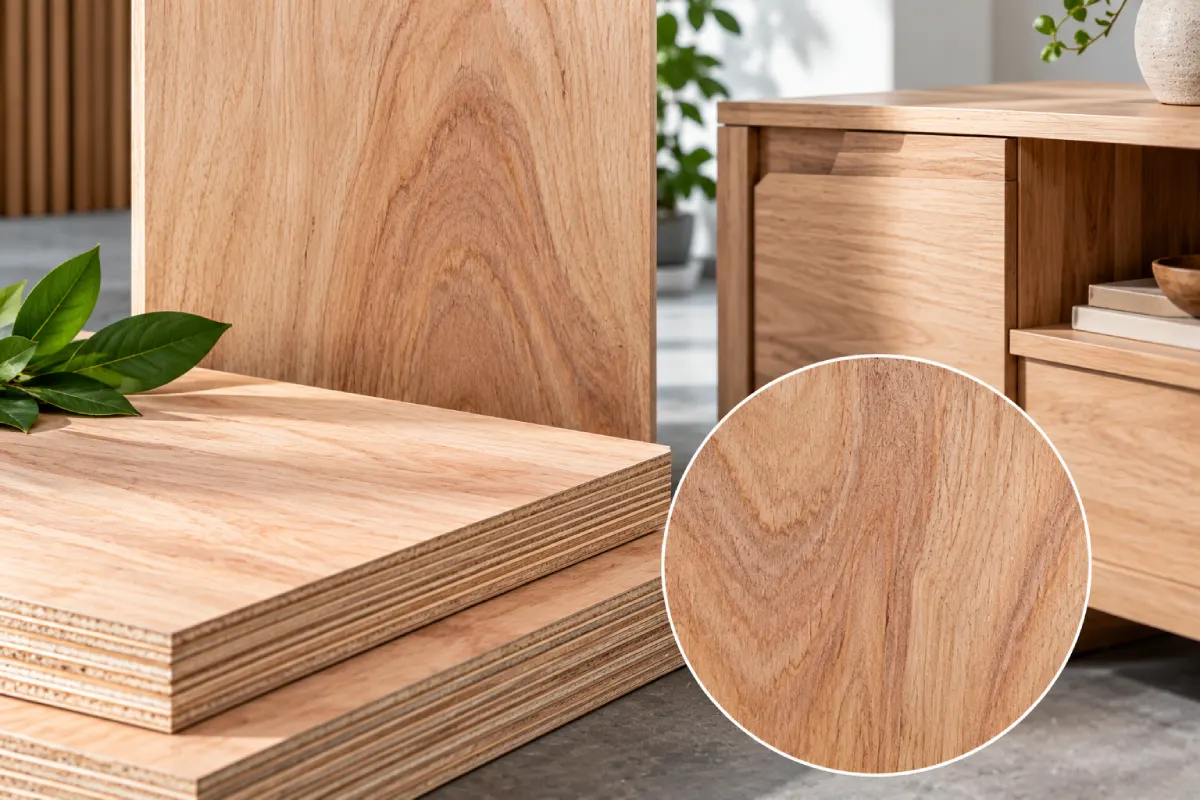
Ilomba wood comes from Pycnanthus angolensis, a tropical African tree. In Spanish-speaking markets, the same timber is commonly known as Calabo. It is relatively easy to saw and plane, glues well and has good nail and screw holding properties, characteristics that help explain its use in interior joinery, furniture components, veneer and plywood production.
Its combination of workability and versatility makes Ilomba useful for a range of interior applications. However, characteristics such as its natural durability and drying behaviour also need to be considered when selecting the timber for a particular project.
Ilomba is primarily associated with interior applications. Its working properties make it practical for mouldings, interior trim, furniture components and veneer production, while its low natural durability makes untreated Ilomba better suited to indoor applications than to exposed exterior conditions.
For manufacturers, joiners and furniture professionals, the interest of Ilomba lies in the combination of several useful characteristics: it can be machined relatively easily, accepts nails and screws well, glues effectively and can be peeled or sliced into veneer.
These properties also explain why the species is used beyond solid timber applications, including as a raw material for veneer and plywood production.
Ilomba wood is the timber of Pycnanthus angolensis, a tree native to tropical Africa. Ilomba is a name widely used in the international timber trade for this species and appears in technical references and timber databases.
The species occurs naturally across tropical regions of West and Central Africa. Depending on the country and commercial context, the timber can be found under different local or trade names. For buyers in Spain and other Spanish-speaking markets, one of the relevant names is Calabo.
This variety of names is important when sourcing timber internationally. Two suppliers may use different commercial names while referring to the same botanical species, making the scientific name particularly useful when checking material identity.
Yes. Calabo and Ilomba refer to the wood of the same species, Pycnanthus angolensis. “Calabo” is a name commonly used in Spanish-speaking markets, while “Ilomba” is widely used internationally in the timber trade.
Therefore, if you find Calabo in a Spanish timber catalogue or technical document, you may frequently find the same species listed internationally as Ilomba. They are not different woods, grades or qualities: they are different names associated with the same botanical species.
Using the botanical name Pycnanthus angolensis is therefore the clearest way to identify the timber when comparing technical information from different markets.

According to PROTA, Ilomba heartwood ranges from whitish to pinkish brown, sometimes with yellowish markings. The grain is generally straight and the texture ranges from medium to coarse. Articulo_Ilomba_Wood_EN_10.2026
Its main visual characteristics are:
Freshly cut Ilomba can also have an unpleasant odour, although the odour disappears as the timber dries. Articulo_Ilomba_Wood_EN_10.2026
Appearance, however, is only one consideration when choosing a timber for a professional project. Density, machining behaviour, bonding, drying and natural durability are also relevant to how the material can be processed and where it can be used.
The technical properties of Ilomba help explain why it is found in applications ranging from interior joinery and furniture components to veneer and plywood production.
At the same time, not all of its characteristics are advantages. In particular, its drying behaviour and low natural durability need to be considered when specifying the material.
At 12% moisture content, Ilomba wood has a reported density of 440–570 kg/m³, according to PROTA.
This provides a useful reference when assessing the weight of finished components. As with other timbers, however, density should not be evaluated independently of factors such as moisture content, component dimensions and final construction.
One of the most relevant characteristics of Ilomba for joinery and furniture manufacturing is its workability.
Technical data describe the timber as relatively easy to saw and plane with normal tools, although some moderate blunting of cutting edges may occur. Its principal working characteristics include: Articulo_Ilomba_Wood_EN_10.2026
These properties help explain the use of Ilomba in interior joinery and furniture manufacturing, where components may need to undergo several operations including machining, fixing, bonding and finishing.
Drying is one aspect of Ilomba that requires particular attention.
PROTA describes the wood as rather difficult to dry, with a tendency towards collapse, end splitting and distortion.
These characteristics need to be taken into account during the drying process before the timber is used for further manufacturing. Appropriate moisture management is particularly relevant when components will subsequently be machined, bonded or incorporated into joinery and furniture.
Ilomba is not a naturally durable timber. It can be susceptible to termites, powder-post beetles, pinhole borers and marine borers. It is, however, permeable to preservatives, so treatment can be considered where the intended application requires additional protection. Articulo_Ilomba_Wood_EN_10.2026
Its low natural durability makes untreated Ilomba better suited to interior applications than to exposed exterior conditions.
This distinction is important: good machining and bonding properties do not automatically imply high natural durability. The environmental conditions of the final application therefore need to form part of the material selection process.

The uses of Ilomba are closely related to its combination of machining, fixing, gluing and veneer-production characteristics.
PROTA lists applications including plywood corestock, veneer, mouldings, interior trim, interior joinery and furniture components. Articulo_Ilomba_Wood_EN_10.2026
This means Ilomba can appear in different forms throughout the wood manufacturing industry: as a timber component, as veneer and as a material used in plywood production.
Interior joinery is one of the documented applications of Ilomba wood. Mouldings, interior trim and other joinery components can benefit from its relatively easy machining and good nail and screw holding properties.
Joinery manufacturing commonly requires several operations on the same component. Timber may need to be sawn, planed, profiled, joined and finished, making the overall working behaviour of the species relevant.
Ilomba’s characteristics make it practical for these processes, although its low natural durability means the conditions in which the finished component will be used should always be considered.
Ilomba is also used for furniture components and related interior applications.
Furniture manufacturing requires materials that can be machined accurately and then assembled or bonded effectively. Ilomba’s combination of workability, good fixing and good gluing properties is useful in this context.
Its ability to take paint also provides options for finished furniture components, although its relatively absorbent surface needs to be considered during the finishing process.
The value of Ilomba in furniture manufacturing therefore lies less in a single property than in the combination of characteristics it offers during production.
Mouldings and interior trim are also documented uses of Ilomba.
Producing mouldings involves machining timber into defined profiles, making sawing and planing behaviour particularly relevant. Ilomba’s generally straight grain and workable character are useful characteristics for this type of processing.
For interior trim, its nail and screw holding properties are also relevant where components need to be mechanically fixed during assembly or installation.
Ilomba is not used only as solid timber. It can also be peeled and sliced to produce veneer.
PROTA reports that the species peels and slices well and can produce good-quality veneer. It also recommends steaming the logs before processing because the timber can contain occasional hard spots. Articulo_Ilomba_Wood_EN_10.2026
This ability to produce veneer significantly extends the possible applications of the species. Thin sheets of wood can be used in veneered products and can also become part of the construction of engineered wood panels.
This is where the characteristics of Ilomba wood begin to connect directly with plywood manufacturing.
Ilomba is also documented as a material for plywood corestock. Articulo_Ilomba_Wood_EN_10.2026
Plywood is manufactured by bonding multiple veneers together, typically arranging adjacent layers with alternating grain directions. This creates an engineered panel whose performance depends on its complete construction rather than on a single property of the original timber.
The ability of Ilomba to be processed into veneer, together with its good gluing characteristics, explains its use in plywood manufacturing.
For professional buyers who need panels rather than solid timber, Picó Plywood manufactures [Ilomba plywood] for professional applications.
The suitability of Ilomba for joinery and furniture becomes clearer when its properties are considered as a combination rather than individually.
Its relatively easy sawing and planing facilitate machining, while its good nail and screw holding properties are relevant during assembly. Its ability to glue well is useful where components need to be bonded, and its capacity to take paint provides additional finishing possibilities.
At the same time, Ilomba can be processed into veneer, extending its potential beyond solid timber components into veneered products and plywood manufacturing.
This combination helps explain why the species is documented for mouldings, interior trim, furniture components, veneer and plywood corestock.
There are nevertheless limitations to consider. Drying requires attention and natural durability is low, so the requirements of the final application need to be evaluated alongside the timber’s manufacturing advantages.
For interior manufacturing, the value of Ilomba therefore comes from balancing its workability and versatility with the conditions in which the finished component will be used.
Choosing a timber for a professional joinery or furniture project should not be based on one characteristic alone.
The intended application determines which properties matter most. A manufacturer producing mouldings may place greater emphasis on machinability and profiling, while furniture production can also depend on bonding, fixing and finishing behaviour. Veneer and plywood manufacturing introduce another set of processing requirements.
When assessing Ilomba for a project, relevant factors include:
This application-based approach provides a more useful way of evaluating Ilomba than looking at density, appearance or workability in isolation.

One of the industrial applications of Ilomba is its conversion into veneer and plywood.
A plywood panel is not simply a thicker piece of solid wood. Timber is processed into thin veneers that are subsequently bonded in layers to form an engineered panel. The characteristics of the finished plywood therefore depend on the complete panel construction, the veneers, the bonding system and the manufacturing specification.
Ilomba’s ability to peel and slice into veneer, combined with its good gluing properties, helps explain its use in plywood production.
This distinction is particularly important for buyers. Someone searching for Ilomba wood may want information about the species and its characteristics, while a furniture, joinery or industrial project may actually require a manufactured plywood panel with defined specifications.
Picó Plywood manufactures and supplies [Ilomba plywood] for professional applications. If your project requires panels rather than information about the timber itself, the product page provides the relevant product and technical information.
Ilomba wood is the timber of Pycnanthus angolensis, a tropical African tree. It has whitish to pinkish-brown heartwood, generally straight grain and a medium to coarse texture. Its working properties contribute to its use in interior joinery, furniture components, mouldings, veneer and plywood.
Yes. Ilomba and Calabo refer to the wood of the same species, Pycnanthus angolensis. Calabo is commonly used in Spanish-speaking markets, while Ilomba is widely used internationally in the timber trade.
Documented uses include interior joinery and trim, mouldings, furniture components, veneer and plywood corestock.
Ilomba is considered relatively easy to saw and plane with conventional tools, although moderate blunting of cutting edges may occur. It also has good nail and screw holding properties and glues well.
Ilomba is not naturally durable and can be susceptible to termites and wood-boring insects. It is permeable to preservatives, but untreated Ilomba is generally better suited to interior applications than to exposed exterior conditions.
Yes. Ilomba takes paint well, although the timber is relatively absorbent. The intended finish and surface preparation should therefore be considered during manufacturing.
Yes. Furniture components are among the documented uses of Ilomba wood. Its machining, fixing and gluing properties make it relevant to furniture manufacturing, particularly for interior applications.
Yes. Ilomba peels and slices well to produce veneer. This characteristic also contributes to its use in plywood production.
Yes. Ilomba is documented as a material for plywood corestock and can be processed into veneer. Picó Plywood manufactures [Ilomba plywood] for professional applications.
pico Plywood Contact
Contact Information
To learn more about our Plywood Products or discuss your project requirements, please reach out to us through the following channels.
This website uses cookies so that we can provide you with the best user experience possible. Cookie information is stored in your browser and performs functions such as recognising you when you return to our website and helping our team to understand which sections of the website you find most interesting and useful.
Strictly necessary cookies must always be enabled so that we can save your cookie setting preferences.
If you deactivate this cookie we will not be able to save your preferences. This means that each time you visit this website you will have to activate or deactivate cookies again.
Esta web utiliza Google Analytics para recopilar información anónima tal como el número de visitantes del sitio, o las páginas más populares.
Dejar esta cookie activa nos permite mejorar nuestra web.
Please enable strictly necessary cookies first so we can save your preferences!