

pico Plywood Contact
Contact Information
To learn more about our Plywood Products or discuss your project requirements, please reach out to us through the following channels.
PLYWOOD
Learn how to choose the right plywood for construction projects. Compare marine, phenolic and film faced plywood, understand grades, thickness and best uses.

Table of Contents for the Article
Selecting the right plywood for construction projects is one of the most critical decisions professionals face when planning structural and industrial applications. The wrong choice can lead to structural failures, accelerated deterioration, safety hazards, and significant cost overruns — all of which are entirely avoidable with the right knowledge.
Whether you are working on large-scale commercial builds, marine structures, concrete formwork, or industrial flooring, each application demands a specific type of plywood with distinct properties in terms of moisture resistance, load capacity, and surface finish.
In this expert guide, we walk you through every key factor professionals must evaluate when choosing construction plywood: from understanding the main types — including marine plywood, phenolic plywood, and film faced plywood — to analyzing thickness requirements, grading systems, and environmental conditions.
By the end of this guide, you will have a clear framework to make informed, technically sound decisions for any construction scenario.
Not all plywood is built the same. The structural performance and long-term durability of a build depend directly on the quality and type of plywood selected. Using an inadequate panel in a load-bearing application, for example, can compromise the entire structural integrity of a project.
Environmental exposure is another decisive factor. Plywood used in outdoor environments, high-humidity areas, or in direct contact with water requires moisture-resistant or waterproof bonding — properties not found in standard interior-grade panels.
From a financial perspective, choosing the correct plywood from the start delivers long-term cost efficiency. Panels that are properly matched to their application last significantly longer, reducing the need for early replacements and repairs that can multiply initial costs.
Finally, compliance with construction standards and safety regulations is non-negotiable. Using certified, application-appropriate plywood ensures that your projects meet building codes and international quality benchmarks — protecting both your investment and the end users.
Understanding the main plywood categories is the first step toward making the right selection. Each type has been engineered for specific performance requirements and environments.
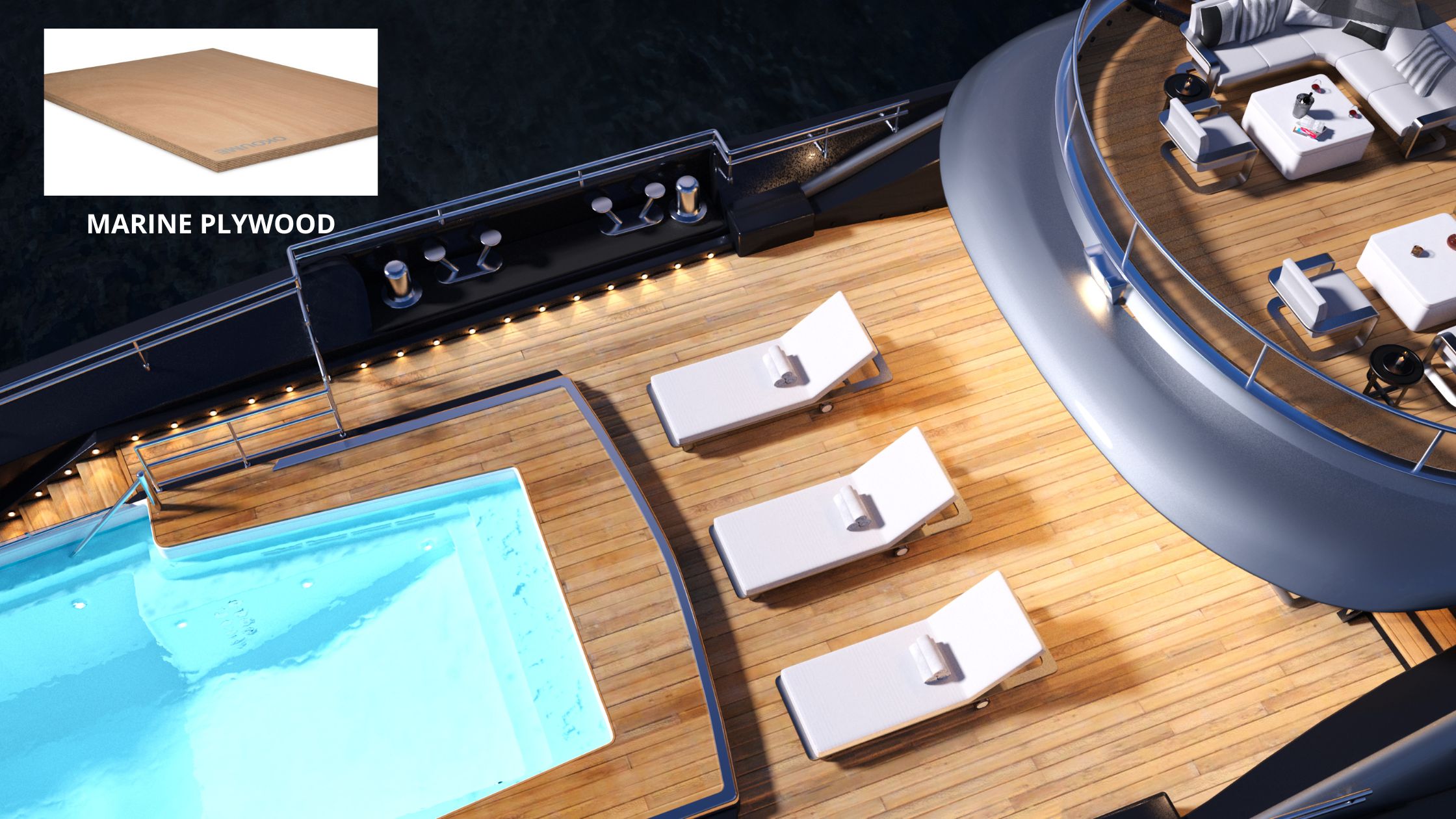
Marine plywood is specifically engineered for high-moisture and water-exposed environments. It is manufactured using waterproof adhesives and high-quality veneers with minimal core voids, making it resistant to delamination even under prolonged exposure to water.
Its primary applications include boats, docks, pontoons, exterior structures, and any installation where resistance to humidity and standing water is essential.
Unlike standard plywood, marine-grade panels maintain their structural integrity in demanding conditions, making them a premium choice for projects where failure is not an option.
Phenolic plywood is produced with phenol-formaldehyde resin-bonded layers, delivering exceptional durability, density, and resistance to moisture, chemicals, and mechanical stress. This makes it the ideal choice for heavy-duty industrial environments where standard panels would fail prematurely.
Common applications include industrial flooring, vehicle bodies, freight containers, warehouses, and any structural use requiring superior performance under heavy loads and adverse conditions.
Its superior resistance to delamination and dimensional stability under varying temperature and humidity conditions makes phenolic plywood a benchmark product for industrial construction.
Film faced plywood is a structural panel coated on one or both sides with a phenolic film, typically black or brown, that provides a smooth, hard surface ideal for concrete formwork applications.
The film coating offers high reusability — the same panel can be used multiple times without degrading the surface quality of the concrete — as well as excellent resistance to moisture, abrasion, and cement adhesion.
Film faced plywood is a staple on large construction sites, civil engineering projects, and concrete infrastructure builds where efficiency and surface finish quality are critical.
Structural plywood is designed to meet specific load-bearing and shear strength requirements in building applications such as wall sheathing, roof decking, and subfloors.
Standard construction plywood, while not rated for the most demanding applications, is a cost-effective solution for non-structural interior uses: partitions, temporary formwork, interior cladding, and similar applications where exposure to moisture and heavy loads is not a concern.
Understanding when standard plywood is sufficient — and when a specialized product is required — is key to optimizing both project performance and budget.

Selecting the right plywood for any construction project requires evaluating several technical parameters. Here are the most important factors professionals must consider:
Structural plywood is engineered and certified to carry loads, resist bending, and perform under stress. Non-structural plywood, while suitable for many applications, is not designed to sustain significant weight or mechanical pressure.
When evaluating panel strength, key considerations include the number and thickness of veneer layers, core composition, and adhesive type — all of which directly affect the panel’s bending strength, stiffness, and load distribution capacity.
Moisture resistance is perhaps the most critical variable in plywood selection. Panels destined for outdoor use, wet environments, or areas with high humidity must be manufactured with waterproof or water-resistant adhesives — typically phenolic or melamine-based resins.
The distinction between water-resistant and waterproof plywood is significant: water-resistant panels can tolerate intermittent moisture, while truly waterproof panels — such as marine plywood and phenolic plywood — are designed for continuous or prolonged exposure to water.
Plywood for construction is available in a range of standard thicknesses, most commonly 12mm, 15mm, 18mm, and 24mm. The correct thickness depends on the application, span between supports, and the loads the panel must carry.
Thicker panels offer greater structural rigidity and load capacity, but also add weight and cost. Selecting the minimum thickness that meets structural requirements is a best practice for optimizing cost without compromising performance.
Plywood grading systems classify panels based on veneer quality and structural performance. Grade A panels feature smooth, defect-free surfaces suitable for visible applications, while lower grades may have natural characteristics such as knots and patches.
For construction applications, structural grades are more relevant than appearance grades. Always verify that the panel meets the relevant standard — such as EN 314, BS 1088, or equivalent — for the intended use and exposure class.

Choosing the correct panel thickness is essential to ensure structural integrity, compliance, and long-term performance. Here is a practical overview of the most common thickness ranges used in construction:
Thin panels in the 6mm to 12mm range are primarily used for interior structures, decorative applications, and light-duty uses such as cabinetry backs, interior wall linings, and lightweight partitions.
These panels are not suited for load-bearing applications but offer flexibility, ease of handling, and cost efficiency for non-structural purposes.
The 15mm to 18mm thickness range is the most widely used in general construction. These panels are standard for flooring underlayment, wall structures, furniture manufacturing, and general-purpose construction applications.
18mm plywood is particularly common for structural flooring and wall sheathing, offering a balance of strength, stability, and workability that makes it the go-to thickness for most construction professionals.
Panels in the 21mm to 25mm range are designed for heavy-duty structural and industrial applications: load-bearing floors, concrete formwork systems, heavy vehicle platforms, and any use requiring maximum rigidity and resistance to deflection.
In industrial construction and civil engineering projects, these thicker panels are essential for ensuring the structural performance required by the application’s demands and safety standards.
Both marine plywood and phenolic plywood offer superior moisture resistance compared to standard panels, but they are engineered for different environments and applications. Understanding their differences is key to making the right selection.
Marine plywood excels in applications involving direct and prolonged contact with water. Its waterproof adhesive system and void-free core prevent delamination and maintain structural integrity in aquatic or high-humidity environments.
Phenolic plywood offers comparable moisture resistance combined with superior density and mechanical durability. Its resin-impregnated construction makes it highly resistant not only to water but also to chemicals, abrasion, and heavy mechanical loads — properties marine plywood does not match.
Marine plywood is the preferred choice for boats, docks, coastal structures, and any application where the panel will be submerged or continuously exposed to water.
Phenolic plywood is better suited to industrial flooring, heavy transport platforms, container manufacturing, and structural applications where load resistance and chemical durability are as important as moisture protection.
Marine plywood tends to be priced at a premium due to its rigorous quality specifications. Phenolic plywood offers competitive pricing relative to its exceptional performance characteristics, making it a highly cost-efficient option for heavy-duty industrial construction
The decision should always be based on the specific exposure conditions and mechanical requirements of the project — not on price alone.
Avoiding these common errors will save you time, money, and structural headaches:
Knowing what to look for when evaluating plywood quality ensures you are getting a product that will perform as expected under real construction conditions:
For further reference on plywood standards and grading, visit: APA – The Engineered Wood Association
Picó Plywood is a specialized industrial plywood supplier with extensive experience serving construction professionals, contractors, engineers, and industrial buyers worldwide. Our product range is engineered for demanding construction and industrial applications where quality and reliability are non-negotiable.
Our core product range includes the most critical plywood types for construction:
Beyond the product, Picó Plywood provides technical support to help you identify the right panel specification for your exact application — whether you need guidance on thickness, grade, adhesive type, or compliance with specific standards.
We supply industrial quantities globally, working with construction companies, contractors, and distributors who require consistent quality, reliable lead times, and competitive pricing.
➡ Contact our team: Plywood Supplier — Get in Touch | Phenolic Plywood | Marine Plywood

The best plywood for construction depends on the specific application. Marine plywood is best for water-exposed and high-humidity environments; phenolic plywood is ideal for heavy-duty industrial applications requiring maximum durability; film faced plywood is the standard choice for concrete formwork; and structural plywood is appropriate for general load-bearing applications such as wall sheathing, flooring, and roof decking.
The most common construction thicknesses range from 12mm to 25mm. 12mm panels are used for light-duty and interior applications; 15mm and 18mm for general flooring, wall structures, and standard construction; and 21mm to 25mm for heavy-duty structural and industrial applications requiring maximum load capacity.
Marine plywood is not necessarily stronger in terms of load capacity, but it is significantly more durable in moisture-exposed conditions. It is manufactured with waterproof adhesives and void-free cores that prevent delamination, warping, and structural failure in wet environments — properties standard plywood does not offer.
Yes — phenolic plywood is waterproof. The phenol-formaldehyde resin used in its manufacture provides an impermeable bond between veneer layers, making it highly resistant to water, moisture, and even chemical exposure. This makes it suitable for outdoor structures, industrial environments, and heavy-duty construction applications where waterproofing is a critical requirement.
For outdoor construction, marine plywood and phenolic plywood are the top choices. Both offer waterproof bonding and high resistance to moisture and weathering. Marine plywood is preferred for direct water contact applications (docks, marine structures), while phenolic plywood is better suited for outdoor industrial installations, flooring, and structural outdoor applications requiring additional mechanical durability.
Selecting the correct plywood is a technical decision that directly impacts the safety, durability, and cost-efficiency of your construction project. Whether you need marine plywood for water-exposed environments, phenolic plywood for heavy-duty industrial uses, or film faced plywood for concrete formwork, the right specification makes all the difference.
pico Plywood Contact
Contact Information
To learn more about our Plywood Products or discuss your project requirements, please reach out to us through the following channels.

Esta web utiliza cookies para que podamos ofrecerte la mejor experiencia de usuario posible. La información de las cookies se almacena en tu navegador y realiza funciones tales como reconocerte cuando vuelves a nuestra web o ayudar a nuestro equipo a comprender qué secciones de la web encuentras más interesantes y útiles.
Strictly necessary cookies must always be enabled so that we can save your cookie setting preferences.
If you deactivate this cookie we will not be able to save your preferences. This means that each time you visit this website you will have to activate or deactivate cookies again.
Esta web utiliza Google Analytics para recopilar información anónima tal como el número de visitantes del sitio, o las páginas más populares.
Dejar esta cookie activa nos permite mejorar nuestra web.
Please enable strictly necessary cookies first so we can save your preferences!