How to Use Flexible Plywood in Furniture and Interior Design Projects
Introduction: What is Flexible Plywood and Why is it So Versatile?
Flexible Plywood has revolutionized the world of design and furniture manufacturing thanks to its unique properties. Unlike traditional plywood, this material allows for the creation of curved plywood furniture and innovative designs without compromising strength or durability. Its versatility makes it an ideal choice for interior design, decoration, and custom furniture projects.
Brief Explanation of What Flexible Plywood Is
Flexible Plywood, also known as bendable plywood, is a type of wood panel specifically designed to bend easily without breaking or losing its structural integrity. It is manufactured using wood veneers with a special fiber arrangement, allowing it to curve effortlessly in both longitudinal and transverse directions.
Thanks to this design, it is an ideal solution for projects requiring curved surfaces or organic shapes, such as contemporary furniture, decorative paneling, and innovative architectural elements.
Key Properties Flexible Plywood: Flexibility, Lightness, and Ease of Handling
This material stands out for three main characteristics:
Exceptional Flexibility
Its ability to adapt to curves and complex shapes without fracturing makes it perfect for cutting-edge designs.
Lightweight
It is lighter than other types of plywood, making it easier to handle and transport.
Easy to Work
It can be cut, sanded, and assembled with ease, allowing for the creation of complex structures without the need for specialized machinery.
Benefits of Its Use Flexible Plywood in Furniture and Interior Design
Limitless Design Possibilities
Enables the creation of furniture and decorative elements with curved and organic shapes, opening up new creative opportunities.
Customizable Finishes
Can be coated with laminates, natural wood veneers, or paint to achieve different styles and aesthetics.
Sustainability
Its efficient manufacturing process optimizes resource use and reduces material waste compared to other curved furniture construction methods.
Durability and Strength
Despite its flexibility, it is a robust and stable material, making it ideal for long-term applications.
In the following sections, we will explore how to use it in furniture projects, the different types available, and the best techniques to maximize its potential in interior design. 🚀
Properties and Advantages of Flexible Plywood in Furniture and Interior Design
This material is an innovative choice in furniture and interior design, thanks to its properties that combine aesthetics, functionality, and ease of handling. Its ability to adapt to curved and organic designs makes it an essential material for modern and sophisticated projects.
Structural Flexibility Flexible Plywood: How It Enables the Creation of Curved and Organic Shapes
One of its main advantages is its exceptional structural flexibility. Unlike traditional plywood, this material allows for smooth curves without the need for additional cuts or joints. This makes it ideal for:
- Furniture with fluid lines, such as chairs, sofas, and headboards.
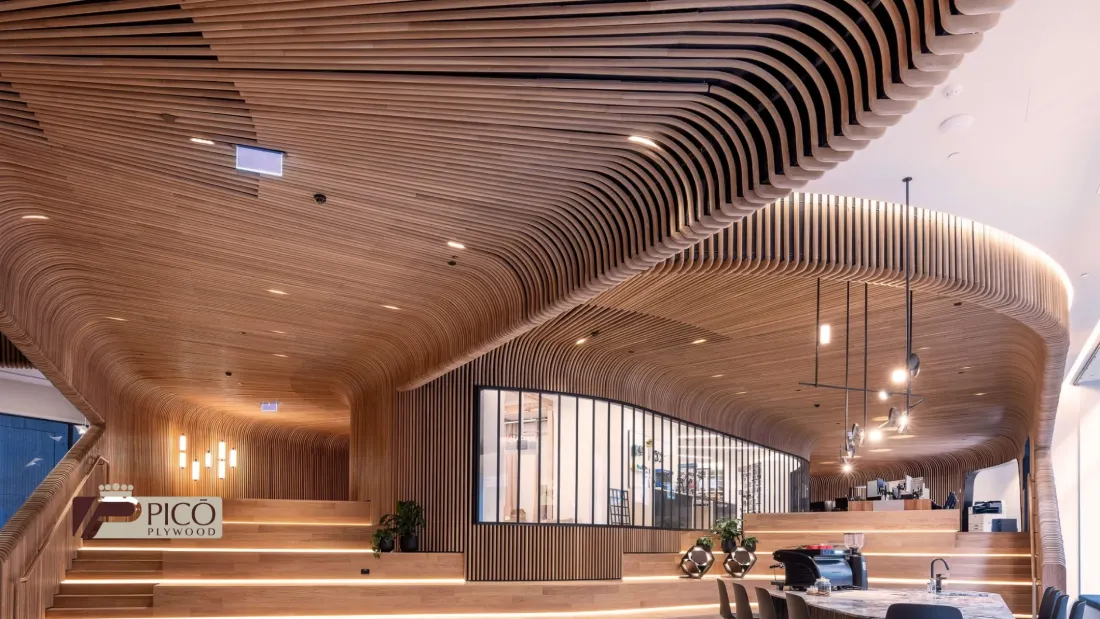
- Decorative cladding, adding movement and dynamism to walls and ceilings.
- Cutting-edge interior design, enabling the creation of architectural elements with organic shapes.
Its adaptability encourages experimentation with new styles and concepts, expanding customization possibilities in furniture and interior spaces.
Strength and Durability Flexible Plywood: Is It Suitable for Everyday Use Furniture?
Although its flexibility might suggest fragility, it is surprisingly strong and durable. Its layers of wood are strategically arranged to provide structural stability without compromising flexibility.
Durability advantages of curved plywood furniture:
- Supports weight and frequent use, making it suitable for furniture such as tables, shelves, and desks.
- Does not easily deform, as its multilayer design distributes tension evenly.
- Good resistance to moisture, especially when sealed or varnished properly.
This makes it a reliable alternative for everyday furniture that requires both aesthetics and functionality.
Ease of Cutting and Assembly Flexible Plywood: Adaptability to Different Projects
It is a highly manageable material, making it easy to cut, assemble, and adapt to different types of projects.
Precise cutting
Can be worked with standard woodworking tools without risk of chipping or breaking.
Easy assembly
Compatible with different fastening techniques, such as adhesives, screws, or staples.
Simple adaptation
Can be bent and adjusted manually or with the help of molds and templates, allowing for custom-made pieces.
This makes it ideal for both professional designers and carpenters, as well as DIY enthusiasts looking to create unique furniture without the need for specialized tools.
Finishes and Compatibility Flexible Plywood with Other Materials
Another major advantage is its compatibility with a wide range of finishes and materials. Its surface can be customized to match any decorative style.
Finish options
- Varnishes and stains to highlight the wood’s natural texture.
- Laminates and fine wood veneers for a sophisticated and elegant appearance.
- Paints and lacquers in a variety of colors for a modern and vibrant finish.
Compatibility with other materials
- Pairs perfectly with metals and glass, achieving contemporary and minimalist furniture.
- Can be integrated with upholstery and padding, ideal for headboards or ergonomic seats.
- Works as a base for acoustic and decorative cladding, enhancing both aesthetics and functionality in a space.
Conclusion Properties and Advantages in Furniture and Interior Design
Thanks to its flexibility, strength, ease of handling, and versatility in finishes, it is an ideal material for creating innovative and elegant curved plywood furniture. In the following sections, we will explore specific applications and examples of its use in furniture and interior design projects. 🚀
Applications in Furniture Design
This material has revolutionized furniture design, enabling the creation of pieces with curved, fluid, and modern shapes that would be impossible to achieve with more rigid materials. Its versatility makes it an ideal option for designers and manufacturers looking to innovate in both the aesthetics and functionality of furniture.
Design of Curved Chairs and Seats: Ergonomics and Modern Aesthetics
Curved chairs and seats are among the most popular uses of curved plywood furniture. Its ability to adapt to ergonomic shapes allows for the design of furniture that combines comfort and style.
✅ Advantages in design and comfort:
- Enables the creation of enveloping, ergonomic seats that better fit the body.
- Offers a cutting-edge aesthetic with organic and fluid shapes.
- Reduces the need for multiple pieces or joints, resulting in more solid and durable furniture.
📌 Application examples:
- Dining chairs with curved backrests for enhanced comfort.
- Lounge chairs or sofas with wave-like designs.
- Wooden benches with smooth edges and harmonious lines.
Tables and Desks with Rounded Edges
It allows for the design of tables and desks with smooth forms and no sharp corners, providing both safety and a modern, elegant aesthetic.
✅ Benefits in office and home furniture:
- Greater safety in environments with children or high foot traffic, preventing injuries from sharp edges.
- Streamlined design that complements both minimalist spaces and contemporary work environments.
- Ability to integrate lighter yet sturdy structures without compromising stability.
📌 Application examples:
- Desks with rounded corners for modern offices.
- Dining tables with curved edges and custom designs.
- Side tables with curved bases for enhanced stability and aesthetics.
Decorative Cladding on Furniture and Curved Flexible Plywood Panels
It is not only used for furniture structures but also as decorative cladding that adds texture and volume to spaces.
✅ Advantages in interior design:
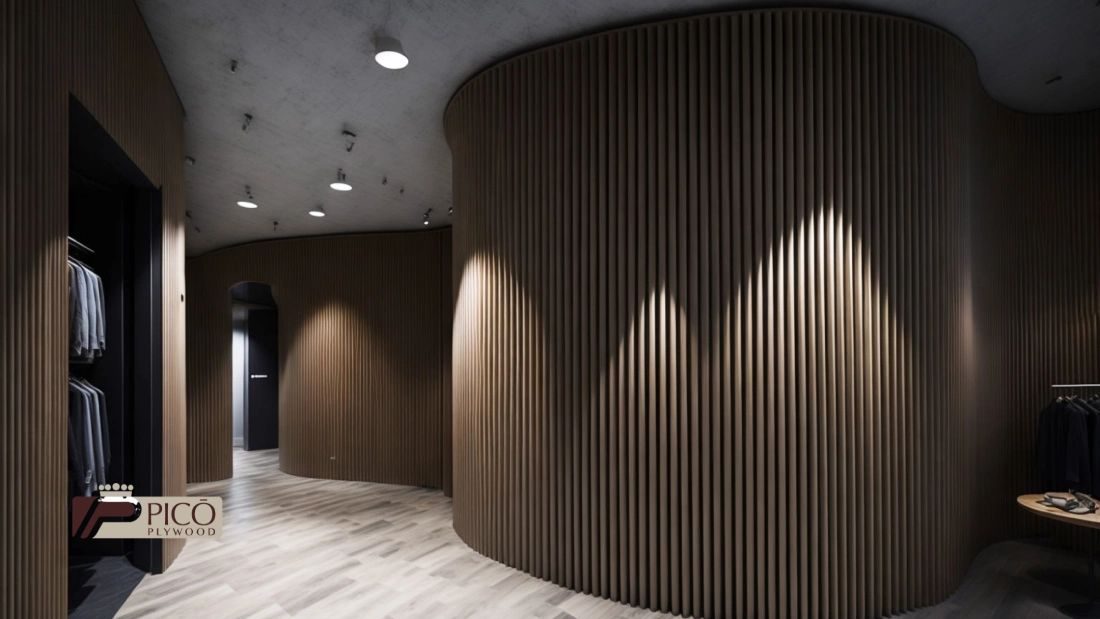
- Enables the creation of three-dimensional panels for walls or furniture.
- Can be used as a covering for columns or cylindrical structures.
- Adds a modern and dynamic touch to spaces without the need for heavy materials.
📌 Application examples:
- Curved decorative panels in office or hotel reception areas.
- Cladding on wardrobes and headboards to add visual dynamism.
- Curved structures in bars, stores, or restaurants for an innovative design.
Shelving and Room Dividers with Innovative Shapes
These panels allow designers to experiment with form and space to create shelves and room dividers with organic lines that transform the layout of any space.
✅ Reasons to choose curved plywood for these applications:
- Enables the design of floating shelves with elegant curves.
- Allows for the creation of partitions or dividers with innovative shapes that provide privacy without fully enclosing a space.
- Encourages the development of modular and functional designs.
📌 Application examples:
- Bookshelves with curved shelves for a fluid and modern effect.
- Room dividers in offices or living rooms with organic shapes.
- Built-in shelving with curved panels for a sophisticated touch.
Custom and Modular Furniture
Thanks to its ease of handling, cutting, and assembly, it is perfect for custom designs and modular furniture that can adapt to different needs and spaces.
✅ Benefits of modular furniture made
- Adaptability: Can be modified or reconfigured according to the user’s needs.
- Modern aesthetics: Fluid, curved lines that break away from the rigidity of traditional furniture.
- Optimized functionality: Ideal for innovative storage solutions.
📌 Application examples:
- Modular storage systems with curved edges.
- Sofas with adjustable backrests made with flexible panels.
- Beds with wrap-around headboards that offer an exclusive and functional design.
Conclusion Applications of Flexible Plywood in Furniture Design
Curved plywood expands the possibilities of furniture design, allowing for the creation of ergonomic, modern, and functional pieces. Its ability to adapt to curved and structural forms makes it an ideal choice for designers looking to innovate in the furniture and interior design industry.
🚀 In the next section, we will explore key tips and techniques for working with these panels to achieve optimal results in every project.

Applications of Flexible Plywood in Interior Design
This material not only revolutionizes furniture design but also serves as a key material in interior design. Its ability to adapt to curved and fluid shapes makes it an ideal choice for cutting-edge projects, from wall cladding to decorative structures in homes, offices, and commercial spaces. Below, we explore its main applications in interior design.
Curved Wall and Ceiling Cladding : A Modern and Fluid Touch
Curved cladding with flexi ply adds a dynamic and elegant visual effect, ideal for spaces seeking an innovative and immersive design.
✅ Benefits of using curved plywood on walls and ceilings:
- Creates continuous surfaces without visual interruptions.
- Adds a sense of fluidity and movement to the space.
- Allows for the integration of hidden lighting and three-dimensional effects.
📌 Application examples:
- Curved panels in hotel lobbies for a sophisticated aesthetic.
- Wavy ceilings in auditoriums and theaters to enhance acoustics and design.
- Fluid-shaped walls in lounges and restaurants for a distinctive touch.
Decorative Structures and Cutting-Edge Design Elements
It enables the creation of unique decorative structures, adding depth and character to interior spaces.
✅ Advantages in avant-garde design:
- Facilitates the fabrication of three-dimensional elements with unique curves and volumes.
- Allows for the design of sculptural and decorative pieces that blend seamlessly into the environment.
- Its lightweight and durability make it ideal for suspended or modular structures.
📌 Application examples:
- Artistic installations in galleries or museums.
- Partition panels with abstract and fluid shapes.
- Decorative elements in shopping malls and airports.
Bars and Counters in Commercial Spaces
In commercial interior design, it has become a key material for creating bars, counters, and customer service areas with innovative shapes.
✅ Benefits of curved plywood in commercial design:
- Enables the creation of counters with enveloping and dynamic forms.
- Facilitates design customization for brands and businesses.
- Provides a sense of exclusivity and modernity in the space.
📌 Application examples:
- Curved counters in luxury stores and boutiques.
- Bar counters in restaurants and cafés with fluid lines.
- Hotel and office reception areas with cutting-edge designs.
Custom-Shaped Doors and Wardrobe Fronts
It allows for innovation in door and wardrobe front design, resulting in more aesthetic and functional surfaces.
✅ Advantages of curved plywood in carpentry:
- Ideal for sliding doors with wavy designs.
- Facilitates the creation of custom wardrobes with curved fronts.
- Allows for combinations with other materials such as glass, metal, or textiles.
📌 Application examples:
- Doors with curved designs in modern homes.
- Hotel suite wardrobes with organic and elegant fronts.
- Space dividers with flexible wooden panels.
Applications in Hotels, Offices, and Luxury Spaces
High-end spaces, such as hotels, prestigious offices, and luxury residences, use curved plywood to add sophistication and exclusivity to their interior designs.
✅ Why it is an excellent choice for these spaces:
- Allows for customized environments adapted to the latest design trends.
- Provides a premium appearance without sacrificing functionality.
- Adds warmth and natural beauty, blending perfectly with indirect lighting and high-end materials.
📌 Application examples:
- Hotel lobbies with curved ceilings and walls.
- Meeting rooms with ergonomic and aesthetic furniture.
- Hallways and corridors with immersive design elements.
Conclusion Applications of Flexible Plywood in Interior Design
This material offers a wide range of applications in interior design, enabling the creation of modern, innovative, and functional spaces. From curved cladding to custom decorative elements, this material opens endless possibilities for architects and designers looking to differentiate their projects.
🚀 In the next section, we will explore the techniques and key tools for working with it and achieving professional finishes in every application.
Techniques and Tips for Working
It is a versatile and easy-to-handle material, but it requires specific techniques to ensure an optimal finish and long-lasting durability. In this section, we will explore best practices for bending, cutting, assembling, and protecting it while avoiding common handling mistakes.
How to Bend Flexible Plywood Properly Without Damaging Its Structure
One of its greatest advantages is its ability to adapt to curved shapes, allowing the creation of fluid and organic designs. However, it is essential to apply curvature correctly to prevent cracks or weakening of the material.
For structural curved panels, see APA’s guide to designing and fabricating curved plywood panels.
Not sure where to start? Read our step-by-step guide on how to bend plywood.
✅ Techniques for bending it without damage:
- Use of molds and templates: Bending it over predefined molds ensures a uniform and precise shape.
- Controlled humidity: Applying a slight amount of moisture in some cases can make the wood more flexible before bending.
- Gradual fixation: In extreme curvature projects, the material can be fixed gradually with clamps until it adopts the desired shape.
- Layered lamination: For more resistant structures, multiple thin layers of flexi ply can be glued together and gradually bent to achieve the desired shape.
📌 Tip for Working
Avoid excessive heat application, as it can weaken the wood structure or create cracks on the surface.
Recommended Tools and Techniques for Cutting and Assembling
To achieve precise cuts and secure assembly, it is essential to use the right tools and follow certain recommendations to optimize the working process with these panels.
✅ Recommended tools for cutting:
- Jigsaw: Ideal for curved and detailed cuts.
- Circular saw with fine-tooth blade: Perfect for clean straight cuts without splinters.
- Electric router: Useful for achieving more precise edge finishes and joints.
- Orbital or manual sander: Helps smooth edges after cutting.
✅ Techniques for solid assembly:
- Use of high-quality adhesives: Carpenter’s glue with moisture resistance is recommended for a strong and durable bond.
- Structural reinforcements: In applications that will bear weight, such as chairs or shelves, internal wooden reinforcements should be added.
- Invisible fastenings: For a cleaner finish, hidden screws or wooden dowels can be used instead of visible nails.
📌 Tip Tools and Techniques for Cutting and Assembling:
When cutting Flexible Plywood, apply masking tape over the cut line to reduce the risk of splintering on the surface.
Best Finishes and Treatments for Protection and Durability
The right finish not only enhances the appearance of curved plywood furniture but also protects the wood from moisture, wear, and other environmental factors.
✅ Recommended finishing options
- Varnishes and lacquers: Protect the surface while highlighting the wood grain.
- Wood oils: Provide a more natural finish, hydrating the wood without fully sealing it.
- Stains and paints: Allow customization of the board’s color, adding extra protection against moisture and UV rays.
- Laminates or decorative veneers: An excellent option for surfaces exposed to intensive use, such as desks or countertops.
📌 Tip Finishes and Treatments for Protection and Durability
Apply the finish on both sides of the board to prevent deformation due to uneven moisture absorption.
Common Mistakes When Working and How to Avoid Them
Despite its ease of use, it can present issues if not handled correctly. Here are some common mistakes and how to avoid them:
❌ Bending it abruptly without proper support
✅ Use molds or progressive fixations to achieve curvature without damaging the structure.
❌ Cutting with inappropriate tools that cause splinters
✅ Use fine-tooth saws and apply masking tape over the cut line to prevent splintering.
❌ Applying finishes without prior sanding
✅ Lightly sand the surface before applying varnish, paint, or sealant for a uniform result.
❌ Not reinforcing joints in load-bearing structures
✅ For furniture and structural elements, reinforce with wooden beams and high-strength adhesives.
📌 Final tip
Always test on a sample piece before applying any cutting, bending, or finishing technique to the final material.
Conclusion Techniques and Tips for Working
Working with this material allows great creative freedom in furniture and interior design, but it requires the use of specific techniques to achieve the best results. With proper bending, the right tools, and protective finishes, this material can transform any project into a functional and aesthetic masterpiece.
🚀 In the next section, we will explore successful project examples and how design professionals have used curved plywood to create innovative and unique spaces.

Sustainability and Design Trends
This material not only stands out for its versatility in furniture and interior design but also for its contribution to sustainability and alignment with modern trends in architecture and decoration. Thanks to its efficient use of resources and adaptability to organic designs, this material is a key option for those seeking innovation without compromising environmental responsibility.
Ecological Impact and Sustainable Wood Certifications
One of the most important factors today is the sustainability of materials used in furniture and cladding production. Flexible Plywood is an eco-friendly choice for several reasons:
✅ Reduced wood waste: Its composition allows for better raw material utilization, minimizing waste compared to other types of wood.
✅ Efficient use of adhesives and treatments: Many flexible panels are manufactured with eco-friendly adhesives that reduce volatile organic compound (VOC) emissions, improving indoor air quality.
✅ Lower environmental impact: The production of Flexible Plywood consumes less energy than synthetic materials, and its extended durability reduces the need for frequent replacements.
To check how responsible sourcing is certified, read how FSC chain-of-custody certification works.
📌 Sustainability certifications
To ensure that the plywood used comes from responsible sources, it is essential to check for certifications such as:
- FSC (Forest Stewardship Council): Guarantees that the wood comes from sustainably managed forests.
- OLB (Origine et Légalité des Bois – Origin and Legality of Wood): Certifies that the wood comes from legal and sustainable sources, ensuring traceability from forest harvesting to the final product.
- Low formaldehyde emission certifications: A key indicator to avoid toxic compounds indoors and improve air quality in enclosed spaces.
💡 Tip Sustainable Wood Certifications
Before selecting a panel for a project, verify that it has environmental certifications supporting its origin and composition.
Trends in Curved and Organic Furniture for 2026
Interior and furniture design is evolving towards more fluid and organic styles, where flexible wood plays a fundamental role. For 2025, the following trends will dominate the industry:
🔹 Curved furniture without sharp edges: Soft and flowing lines provide an elegant and welcoming style to any space, improving ergonomics and visual comfort.
🔹 Nature-inspired designs: Natural materials and organic shapes mimic environmental patterns, integrating biophilic elements into interiors.
🔹 Warm minimalism: Unlike traditional minimalism, this trend incorporates curved wood elements to create cozier and less rigid spaces.
🔹 Modular and multifunctional spaces: Its flexibility enables the creation of adaptable furniture that can be rearranged according to user needs.
🔹 Natural tones and matte finishes: The aesthetic trend leans towards light woods, satin finishes, and subtle textures that highlight the material’s natural beauty.
📌 Example Trends in Curved and Organic Furniture for 2026
A clear example of this trend is the use of curved headboards, ergonomic chairs made from flexible wood, and wavy wall panels in modern hotels and homes.
How Flexible Plywood Contributes to More Efficient and Eco-Friendly Design
This material is key in the transition towards more efficient and sustainable interior design. Its advantages include:
✅ Lower material consumption: Its structure allows for optimized cuts and minimal waste in furniture and cladding manufacturing.
✅ Greater efficiency in transportation and storage: Its ability to bend reduces costs and required space for transport compared to other rigid materials.
✅ Reduced use of synthetic elements: In many projects, it replaces plastics or other less sustainable materials, promoting the use of renewable resources.
✅ Long lifespan and easy recycling: It is a highly durable material, and at the end of its useful life, it can be recycled or repurposed for new projects.
💡 Example of an eco-friendly application:
In the design of sustainable coworking spaces, curved plywood is used to create curved room dividers, modular desks, and warm cladding without the need for additional structures, reducing the project’s carbon footprint.
Conclusion Sustainability and Design Trends
It not only allows for unprecedented creative freedom but also meets today’s demands for sustainability and efficiency in interior design. Its ability to adapt to emerging trends and its reduced environmental impact position it as an essential material in the architecture and furniture of the future.
🚀 In the next section, we will explore how to apply these concepts in real projects and inspiring examples of designs using curved plywood.
Conclusion How to Use Flexible Plywood in Furniture and Interior Design Projects
Flexible Plywood has revolutionized the world of furniture and interior design thanks to its versatility, durability, and aesthetic appeal. Its ability to adapt to curved shapes and its ease of handling make it an essential material for innovative and sustainable projects, custom elements, it offers functional solutions without compromising creativity.
Summary of Key Benefits and Applications
🔹 Structural flexibility: Enables the creation of curved and fluid designs that would be impossible with conventional wood.
🔹 Durability and resistance: Suitable for daily-use furniture and high-traffic applications.
🔹 Compatibility with finishes and other materials: Can be painted, varnished, or combined with other elements for a perfect finish.
🔹 Diverse applications: From chairs and desks to wall and ceiling cladding, counters, and room dividers.
🔹 Sustainability and efficiency: Made from certified wood and designed to reduce material waste.
📌 Example of application
An architecture studio can use curved plywood to create curved walls in a modern office, achieving an innovative design with a low environmental impact.
Invitation to Explore Picó Plywood
At Picó Plywood, we offer a range of high-quality Flexible Plywood panels designed to meet the needs of designers, architects, and furniture manufacturers. Our products meet sustainability standards and guarantee resistance, aesthetics, and ease of use in any application.
🔹 Explore our collection: From standard flexible panels to customized options for specific projects.
🔹 Variety of finishes: Choose from different thicknesses and treatments to tailor the material to your design.
🔹 Quality assurance: Our materials are certified to ensure optimal performance in every application.
📍 Discover more on our website: www.picoplywood.com
Personalized Consultation for Flexible Plywood Projects
Every project is unique, and choosing the right material is key to its success. At Picó Plywood, we have a team of experts ready to help you select the ideal Flexible Plywood for your design needs.
✔ Do you have questions about which panel to choose?
✔ Do you need recommendations for cutting and finishing?
✔ Do you want to learn the best assembly techniques?
📞 Contact us for personalized advice and take your ideas to the next level with the best Flexible Plywood on the market.
🚀 Transform Your Projects with Flexible Plywood from Picó Plywood
🌱 Opt for an innovative, sustainable, and functional design.
🎨 Explore new shapes and textures with flexible wood.
📢 Visit us at www.picoplywood.com and find the perfect solution for your project.
✨ Trust Picó Plywood and bring your ideas to life without limits! ✨
pico Plywood Contact
Contact Information
To learn more about our Plywood Products or discuss your project requirements, please reach out to us through the following channels.