pico Plywood Contact
Contact Information
To learn more about our Plywood Products or discuss your project requirements, please reach out to us through the following channels.
PLYWOOD
Wholesale film faced plywood: learn how to choose the right supplier, compare core materials and specifications, and request your technical data sheet before buying in bulk.
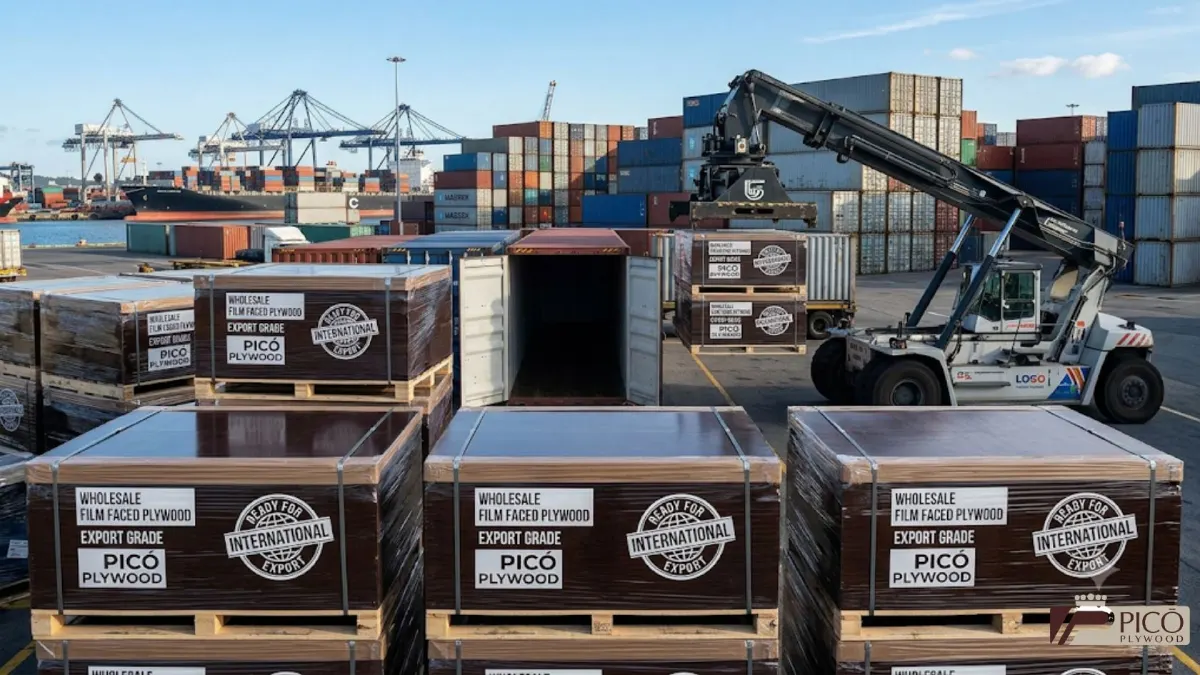
For contractors, distributors, and importers sourcing wholesale film faced plywood, getting the specification right the first time saves both money and shipping costs. This guide walks you through what film faced plywood is, why buying it wholesale makes sense, how to vet a supplier, and the specific questions to ask before placing a bulk order — so you can buy with confidence instead of guesswork.
Wholesale film faced plywood is film-coated plywood purchased in bulk directly from a manufacturer or supplier rather than through a retailer. The phenolic or melamine film coating gives it a smooth, water-resistant surface ideal for concrete formwork, industrial flooring, and transport applications, while buying at volume reduces the cost per sheet for contractors and distributors.
For the full technical specification sheet and product range, see our film faced plywood page.
Buying at wholesale volume brings the price per sheet down significantly compared with retail or small-batch purchases, since freight, customs, and handling costs are spread across a full container rather than a handful of panels.
When every sheet comes from the same production batch, you avoid the variation in film thickness, core density, and panel flatness that can creep in when sourcing from multiple small suppliers over time.
Wholesale suppliers hold or can produce the stock levels that construction and transport projects actually need — full containers, not pallets — so a large formwork or flooring project doesn’t stall waiting on partial shipments.
A genuine wholesale supplier should offer flexible shipping arrangements — FCL (full container load), consolidated LCL shipments, and support with the documentation importers need for customs clearance.
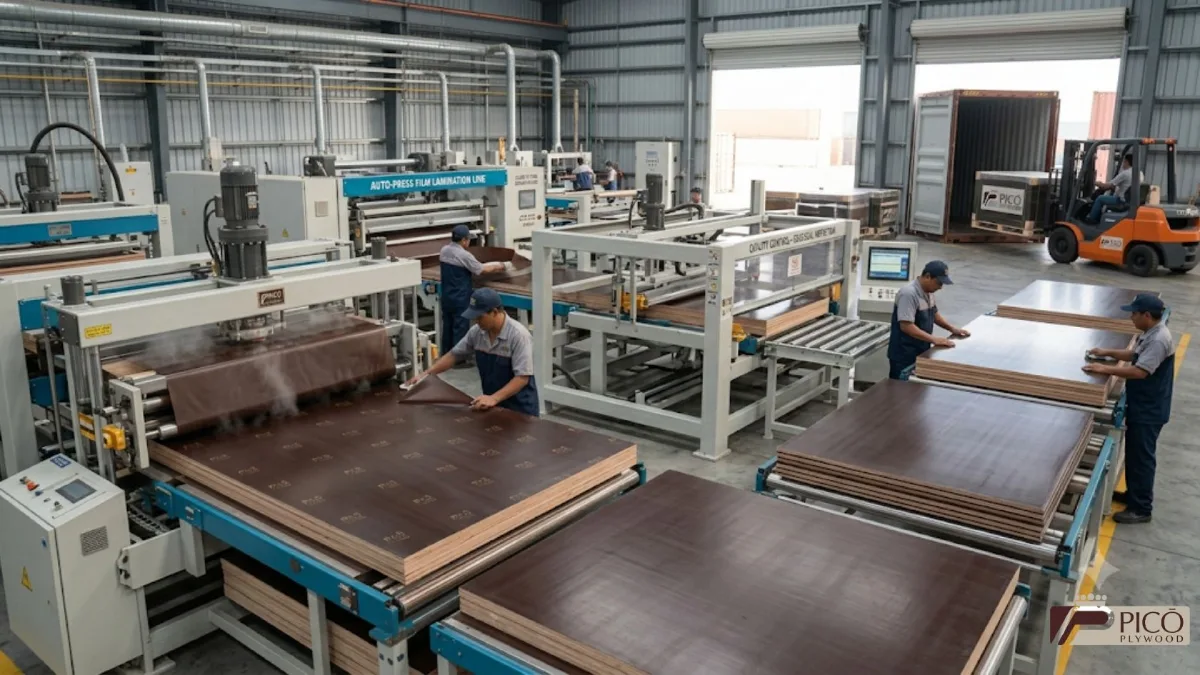
Sourcing at volume raises the stakes of getting the supplier wrong — a bad batch discovered after a container has landed is a far more expensive mistake than a bad single sheet. These five factors are worth checking before you commit to an order.
Ask how long the supplier has been producing film faced plywood specifically, not plywood in general — the film lamination process has its own learning curve, and experience shows up in consistent pressing, curing, and film adhesion. Reputable manufacturers typically reference recognized plywood manufacturing standards published by industry bodies such as the APA – The Engineered Wood Association.
Confirm the supplier can actually produce (or has in stock) the volume you need within your timeline — a supplier with excellent quality but limited capacity can still delay a project if your order exceeds what they can realistically deliver.
A supplier already exporting to your region, or to markets with similar import requirements, will typically have the documentation, packaging, and customs experience your shipment needs — ask for reference export destinations.
Look for FSC certified plywood sourced from responsibly managed forests, along with documented compliance with international quality standards such as ISO 9001 for manufacturing consistency. These aren’t just paperwork — they’re evidence of a repeatable process behind every sheet you receive.
A supplier that can answer technical questions — recommended thickness for your load case, film type for your application, compatibility with your fasteners — is a better long-term partner than one that only quotes prices. For a direct line to our technical team, visit our contact page.
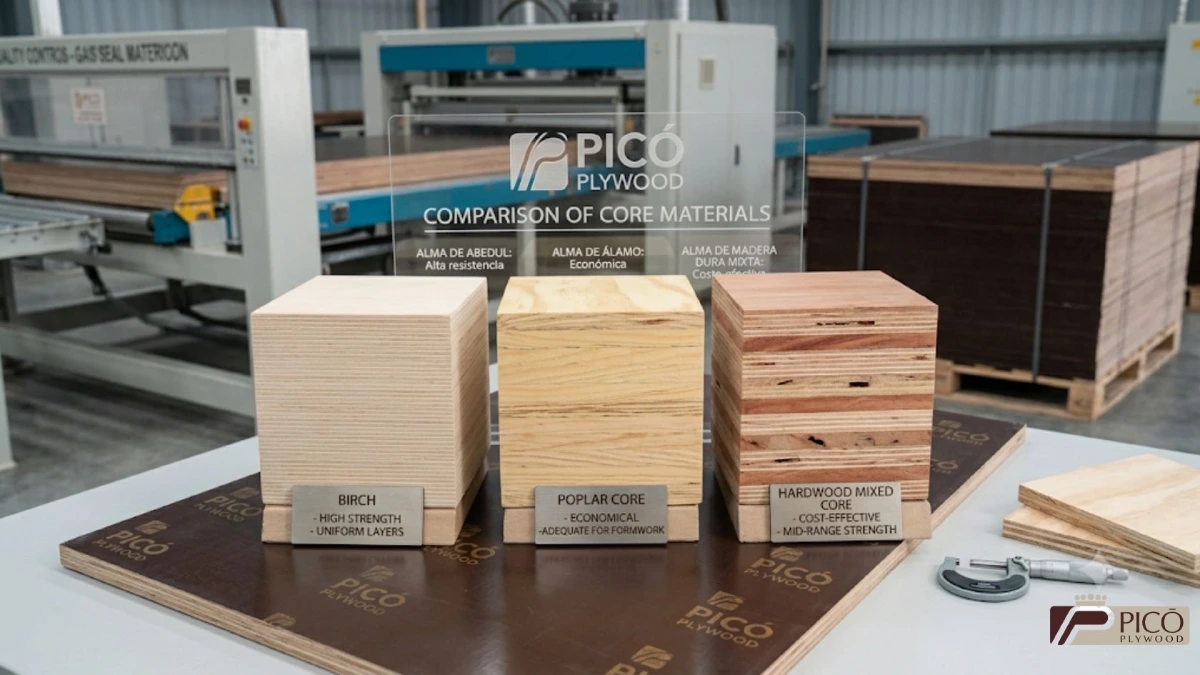
Brown phenolic film is the industry standard for concrete formwork; black film is common for industrial flooring and reuse-heavy applications; anti-slip textured film (wire mesh, hexagonal, or diamond pattern) adds traction for truck floors and platforms.
Confirm the gluing class matches your exposure conditions — Class III / WBP (weather and boil proof) adhesive under EN 636 is the benchmark for exterior and heavy-reuse applications.
Common wholesale thicknesses run from 12mm for lighter panel work up to 18–21mm for structural formwork and heavy-duty flooring — always confirm what your specific load case requires before ordering at volume.
Standard sizes are 1220 x 2440mm and 1250 x 2500mm; larger 1525 x 3050mm sheets are available from some suppliers for projects needing fewer joints.

The single largest volume use — the smooth film releases cleanly from cured concrete and withstands repeated pours, offering 20–50 reuses with proper handling.
Warehouses, workshops, and container flooring benefit from the abrasion resistance and load-bearing capacity of film faced panels.
Truck beds and trailer floors use anti-slip film faced plywood for its combination of traction, durability, and resistance to fuel and chemical spills.
Beyond formwork, film faced plywood serves as temporary site hoarding, protective flooring during construction, and structural sheathing where moisture resistance matters.
Large-scale infrastructure projects — bridges, tunnels, public works — rely on wholesale volumes of film faced plywood for formwork that must perform consistently across dozens or hundreds of pours.
See the full range on our film faced plywood page.
Film faced panels withstand far more handling cycles and reuse than standard plywood before showing wear, which is exactly why they dominate the concrete formwork market.
The phenolic film creates a near-impermeable surface barrier; standard plywood, even with exterior-grade glue, still absorbs moisture at exposed surfaces over time.
Film faced plywood offers a smooth, consistent surface finish batch after batch; standard plywood surface quality varies more with grade and species.
Standard plywood costs less per sheet upfront, but film faced plywood’s reusability and durability typically make it the lower total cost per use for formwork and heavy-duty applications — the same logic that applies when comparing it to phenolic plywood for demanding industrial use.
Feature | Wholesale Film Faced Plywood | Standard Plywood |
Water Resistance | Excellent | Moderate |
Surface Finish | Smooth Phenolic Film | Natural Veneer |
Reusability | High | Low |
Concrete Formwork | Excellent | Limited |
Industrial Applications | Extensive | General |
MOQ varies by supplier and by panel specification (thickness, film type, core). Ask for the MOQ upfront so you can plan container loads or consolidated shipments accordingly — our team can confirm current MOQ for your specification via our contact page.
Lead times depend on whether the specification is in stock or needs to be produced to order; always confirm production time separately from shipping transit time.
Ask how panels are protected for sea freight — edge protection, waterproof wrapping, and palletizing all affect how the shipment arrives after weeks at sea.
Payment terms vary by order size and by whether it’s a first order or a repeat relationship; discuss this directly with your supplier rather than assuming standard retail terms apply to wholesale orders.
Confirm which Incoterms your supplier supports (FOB, CIF, EXW, etc.), since this determines who’s responsible for freight, insurance, and risk at each stage of the shipment.
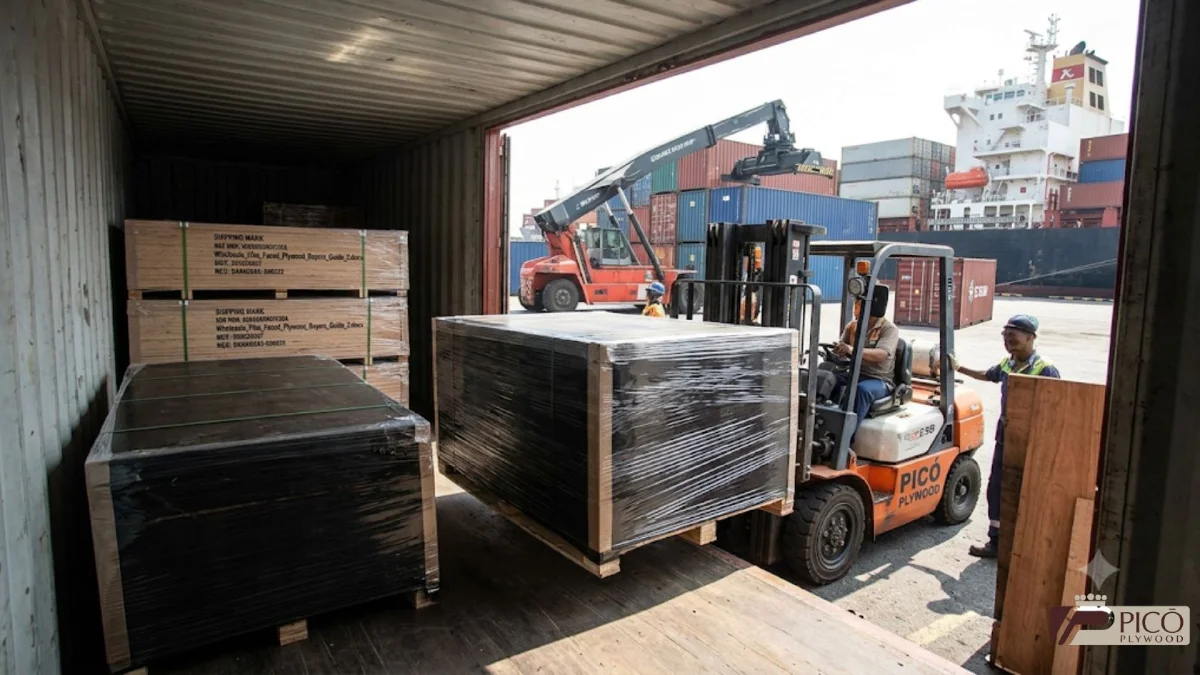
Picó Plywood ships to clients across Europe and internationally, with experience in the documentation and logistics that cross-border wholesale orders require.
Every panel is produced to documented specifications, with certifications available on request — the same standard of consistency covered above in Certifications and Quality Control.
From FCL to consolidated shipments, we work with your team to get wholesale film faced plywood delivered on the schedule your project needs.
Thickness, film type, core species, and panel size can all be adjusted to your project’s specification — wholesale doesn’t mean one-size-fits-all.
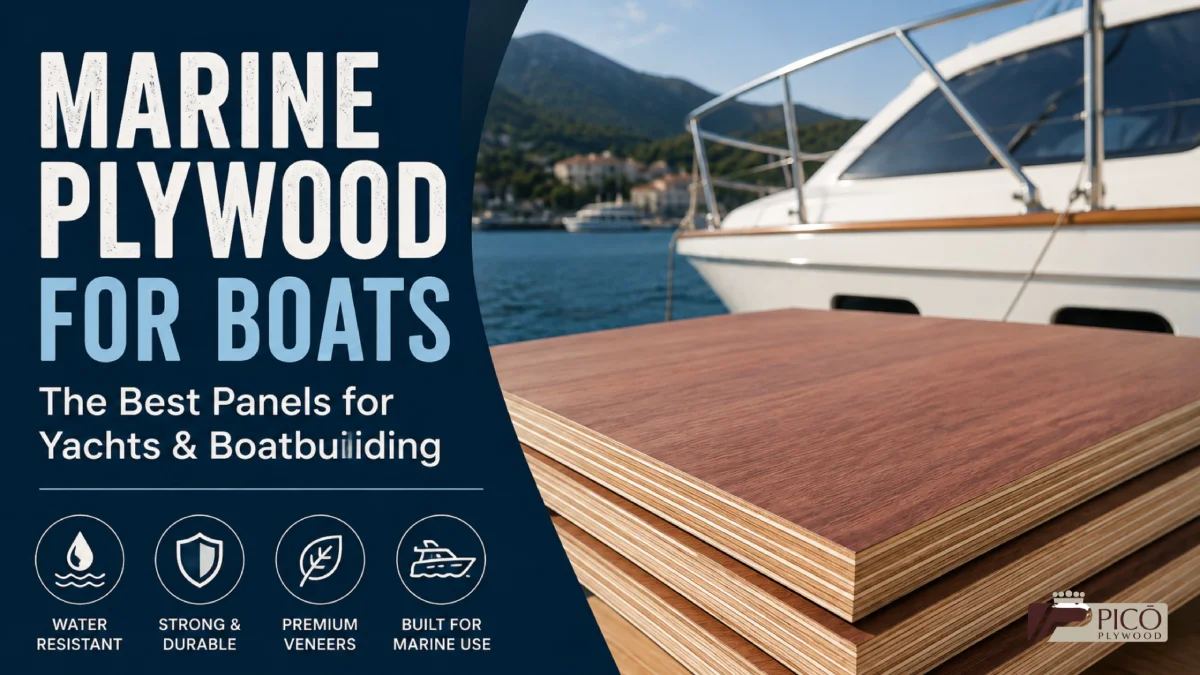
Explore our film faced plywood range, check our marine plywood and phenolic plywood options for related applications, or contact our team directly to discuss your project.
It’s film-coated plywood purchased in bulk, typically by the container, directly from a manufacturer or supplier rather than a retailer — the volume purchase is what brings the cost per sheet down.
MOQ depends on the specific thickness, film type, and core requested; contact our team for the current MOQ on your specification.
Common thicknesses range from 12mm to 21mm, with thicker panels used for structural formwork and heavy-duty flooring.
The phenolic film surface is highly water-resistant and the panel is typically bonded with WBP (weather and boil proof) adhesive, but cut edges should still be sealed to prevent moisture entering the exposed core.
Look for FSC certification for sustainable sourcing and compliance with EN 636 gluing standards; ISO 9001 certification is a good indicator of consistent manufacturing quality control.
Yes — thickness, film type, core species, and panel size can typically be adjusted to your project specification when ordering at volume.
Construction (concrete formwork), transport (truck and trailer flooring), and industrial flooring are the three largest use cases, alongside infrastructure and general construction projects.
pico Plywood Contact
Contact Information
To learn more about our Plywood Products or discuss your project requirements, please reach out to us through the following channels.
This website uses cookies so that we can provide you with the best user experience possible. Cookie information is stored in your browser and performs functions such as recognising you when you return to our website and helping our team to understand which sections of the website you find most interesting and useful.
Strictly necessary cookies must always be enabled so that we can save your cookie setting preferences.
If you deactivate this cookie we will not be able to save your preferences. This means that each time you visit this website you will have to activate or deactivate cookies again.
Esta web utiliza Google Analytics para recopilar información anónima tal como el número de visitantes del sitio, o las páginas más populares.
Dejar esta cookie activa nos permite mejorar nuestra web.
Please enable strictly necessary cookies first so we can save your preferences!